Tomorrow’s Reels: A Sneak Peek at the Next Generation of Slot Entertainment
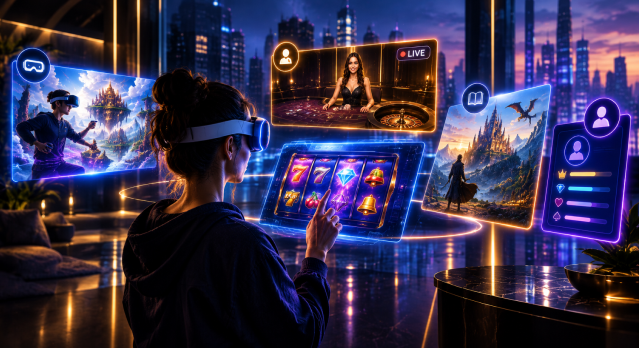
Slots are getting restless. The basic spin is still doing its job, but everything around it is starting to move: live elements, smarter bonus design, longer-running characters, better recommendations and, yes, VR refusing to leave the group chat.
None of this needs five years to become visible. Parts of it are already being tested, and the rest sits close enough to the market to matter now. The interesting bit is how these ideas change an ordinary session, because players are unlikely to care about a technology just because somebody gave it a futuristic name.
Live elements are creeping into slot play
The old split was easy: slots on one side, live casino on the other. That division is becoming much less useful.
A slot can now borrow some of the energy of live entertainment without turning into a completely different product. A presenter may sit around the game, a shared feature can pull several players into the same moment, or a streamed environment can make a normal RNG session feel more like an event.
This opens up a lot more than a flashy background. Imagine a bonus that starts at a scheduled time, a host reacting to what is happening on screen, or a live segment appearing between regular spins. The reel mechanic stays familiar, while the session gets more variation around it.
That matters because “spin, resolve, repeat” is efficient, but it can also get flat. Live elements give developers another way to break the rhythm without burying the player under extra controls.
Bonus rounds are becoming less bossy
For years, a slot bonus usually worked like this: trigger it, accept whatever version appears, carry on.
That is changing. More games are experimenting with choices inside features, different bonus routes and alternative ways to play the same mechanic. One route might favour more frequent action, another might push harder toward bigger potential, while a third changes the behaviour of Wilds or multipliers.
The important part is that the choice can stay simple. Nobody needs a settings menu with seventeen sliders before the first spin. Two clear options can already make the game feel less rigid.
This also gives one title more room to suit different moods. A player may want something calmer today and something punchier tomorrow, without having to leave the game to get it.
Story is finally getting something to do
Slot themes have never been shy. Pirates, gods, cowboys, witches, treasure hunters, mysterious temples — the wardrobe department has been busy for decades.
The weaker part has often been what happens after the theme appears. A character can look dramatic on the loading screen and then contribute absolutely nothing once the reels start moving.
That is where the next wave looks more interesting. Story can sit inside the mechanics through progression, recurring characters, unlockable stages or features that actually change as the session develops. A sequel can pick up an existing world instead of simply recycling the name with a new background.
This does not mean slots need ten minutes of dialogue or a cinematic universe with homework. A little continuity is enough. Give the player somewhere to go, someone to recognise or something to unlock, and suddenly the theme has a job beyond looking pretty.
Personalisation may start with the boring part
The future of slots may first become obvious in the least glamorous place: the lobby.
Game libraries are enormous now, and scrolling through page after page of thumbnails gets old very quickly. Recommendation systems are becoming better at spotting what a player actually opens and which kinds of mechanics they tend to return to.
That can make browsing much less random. Someone who keeps choosing straightforward classic slots should not have to dig through rows of heavily layered feature games every time they log in. The same goes in reverse: a player who clearly likes busy bonus mechanics probably does not need a lobby full of bare-bones fruit slots.
There is nothing especially sci-fi about this, which is probably why it has a good chance of becoming normal quickly. If the lobby gets better at reading taste, players spend less time searching and more time inside games they actually wanted in the first place.
The game itself can remember a little more too
Personalisation does not have to stop at recommendations.
A slot could remember which mode you usually pick, which feature path you favour or how you prefer the interface arranged. Connected titles could carry some of that familiarity from one game to the next, especially when they share characters or belong to the same series.
The useful version of this is subtle. You return to a game and it feels like it knows where you left off, or at least remembers how you normally like to play.
There is no need for the whole game to shapeshift every time you open it. Small conveniences can do more than an over-engineered “personalised universe” nobody asked for.
VR is still alive, just less dramatic about it
VR has spent so many years being announced as the next big thing that the phrase has almost lost its punch.
The technology still makes sense for slots in certain places, though. A bonus room, a special event or an optional 3D environment is far easier to imagine than an entire casino experience moving permanently into a headset.
That smaller role may actually suit VR better. Put it where immersion adds something and leave it out where it would only slow the player down. A short trip into a themed space during a feature could feel fresh; wearing a headset for every quick session is a harder sell.
AR may have an easier ride because it asks less from the player. Characters, effects or interactive objects can be layered into the existing environment without turning the whole session into an equipment check.
So what changes first?
Probably the things that do not require players to learn a completely new way to play. Smarter lobbies, more bonus choices, stronger continuity between games and occasional live elements all fit quite naturally into what slots already do.
VR and AR will likely stay more selective for now. They need a reason to be there, and “because it looks futuristic” is not much of one.
The reel itself has very little to worry about. Three or five columns spinning on a screen remain fast, readable and strangely hard to improve on.
The interesting work is happening around them. Give the player a little more choice, a game world worth remembering and fewer reasons to scroll past fifty titles before finding something good, and tomorrow’s slot already starts to feel different.