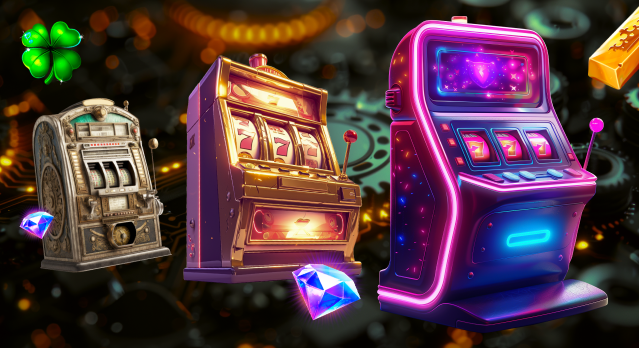
The Evolution of Slot Games Through Changing Mechanics and Player Expectations
Try to remember the first slot machine that made you look twice.
Not the one you chose to play, but the one you kept noticing from across the room. Something about it stayed with you. Maybe the steady turn of the reels, or the way the lights kept blinking in the background. Or simply the sense that the machine was dependable, that it would do exactly what it was meant to do.
You probably did not analyse it at the time. The rules were clear, the pace was steady, and the whole interaction made sense without effort. That kind of simplicity was not accidental. It was built into the machine from the very beginning.
Early slot machines were designed to be direct and responsive. Three reels, one line, one outcome, delivered without hesitation. You pressed the button and the result appeared straight away. Nothing stood between the action and the outcome, and that immediate response is what made players trust the machine in the first place.
Still relevant today
Modern developers continue to revisit that original logic because it still works. You can see it clearly in classic-style titles by ABXplay, where structure takes priority over spectacle.
888 Gems (3×3) and Burning Fruits (3×3) follow the same mechanical principles that defined the earliest machines. The layout is easy to follow, the rules make sense right away, and the game keeps a steady pace from the first spin to the last.
A lot has changed over the years, but the basics still feel familiar. Players tend to trust games that behave predictably, and that habit has never really gone away.
Even the newest slots still rely on the same simple mechanics that once made people stop and watch for a moment.
When the screen gained space
As hardware improved, designers finally had room to experiment. Reels multiplied, paylines spread across the screen, and the game stopped feeling confined to a single outcome. With five-reel layouts replacing the old three-reel structure, the machine gained flexibility and the player gained variety.
This shift becomes obvious when you look at titles such as 100 Dragons, Charm of Fruits, and City of Diamonds. These games introduced structured paylines and dependable bonus triggers that changed how sessions unfolded. Free spins extended play naturally, without breaking the rhythm, and that extension created anticipation. Players began to follow the action more closely because the outcome no longer ended with a single result. It developed over time.
Slots started to feel less mechanical and more responsive.
When features began to shape behaviour
The next transformation was not visual but behavioural. Developers realised that players stayed longer when the game remembered what had just happened. Instead of isolated spins, sessions began to build momentum through linked mechanics and accumulating rewards.
Bonus Gold Rush, Blood Moon Wheel, and Sacred Papyrus show this shift clearly. Respins allowed wins to grow, bonus wheels added variation, and sticky wild symbols carried progress forward from one round to the next. The session developed a sense of continuity, and that continuity encouraged attention. Players watched the reels differently because each spin could influence the next.
At this point, the slot stopped acting like a machine that delivered results and started acting like a system that managed experiences.
When movement became the experience
Modern slots feel confident in motion. You press spin and the response is immediate. Symbols move into place without hesitation, and even when several features are running at the same time, the game keeps its pace. Nothing feels stuck or delayed, which matters more than flashy visuals.
You notice it in titles like Chilli Tumble and Pirate Strike. A win lands, the symbols drop away, new ones fall in, and the sequence carries on. The game does not pause to start over after every result. It continues, and that steady movement keeps people watching.
The presentation has improved too, though not in an obvious way. Backgrounds shift quietly, sound follows the action, and the screen stays easy to read even when things get busy. Players know where they are and what just happened, which makes the whole experience feel comfortable to run for a while.
Where the experience is heading
Modern slot design is less about adding more features and more about making the game feel right from the first spin. The reels move faster, responses are immediate, and the whole session runs without hesitation. Players notice that difference straight away. When a game feels smooth, they stay. When it feels sluggish or confusing, they move on.
Technology has improved, of course, but the real objective has stayed surprisingly simple. A good slot keeps your attention without forcing it. It runs cleanly, responds instantly, and gives you a reason to stick around just a little longer to see how the next spin plays out.